LeetCode in Kotlin


3997. Count Dominant Nodes in a Binary Tree
Medium
You are given the root of a complete binary tree.
A node x is called dominant if its value is equal to the maximum value among all nodes in the subtree rooted at x.
Return the number of dominant nodes in the tree.
Example 1:
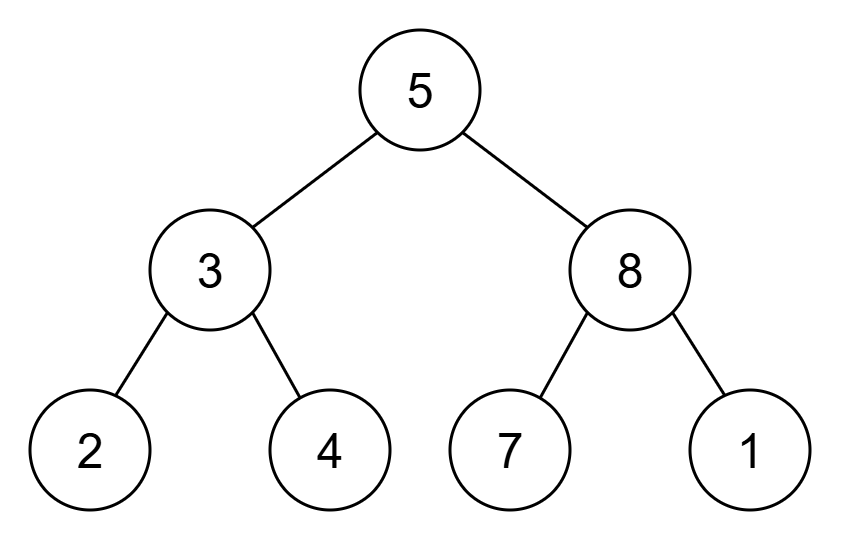
Input: root = [5,3,8,2,4,7,1]
Output: 5
Explanation:
- The leaf nodes with values 2, 4, 7, and 1 are dominant.
- The node with value 8 is dominant because its value is the maximum value in its subtree
[8, 7, 1]. - Thus, the answer is 5.
Example 2:
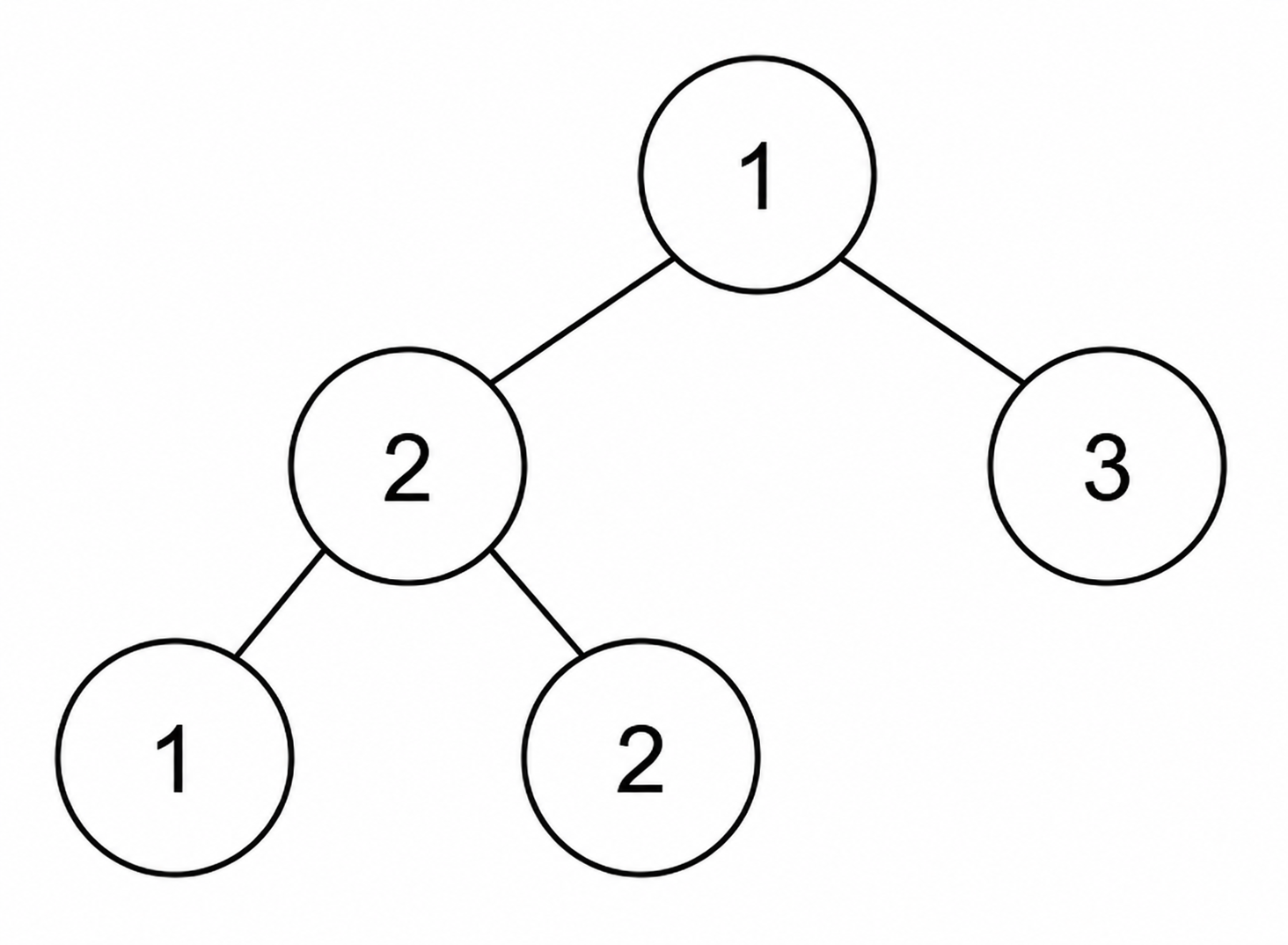
Input: root = [1,2,3,1,2]
Output: 4
Explanation:
- The leaf nodes with values 1, 2, and 3 are dominant.
- The node with value 2 whose subtree is
[2, 1, 2]is dominant because its value is the maximum value in its subtree. - Thus, the answer is 4.
Constraints:
- The number of nodes in the tree is in the range
[1, 105]. 1 <= Node.val <= 109- The tree is guaranteed to be a complete binary tree.
Solution
import com_github_leetcode.TreeNode
import kotlin.math.max

/*
 * Definition for a binary tree node.
 * public class TreeNode {
 *     int val;
 *     TreeNode left;
 *     TreeNode right;
 *     TreeNode() {}
 *     TreeNode(int val) { this.val = val; }
 *     TreeNode(int val, TreeNode left, TreeNode right) {
 *         this.val = val;
 *         this.left = left;
 *         this.right = right;
 *     }
 * }
 */
class Solution {
    private var dominantNode = 0

    fun countDominantNodes(root: TreeNode?): Int {
        dominantNode = 0
        dfs(root)
        return dominantNode
    }

    private fun dfs(root: TreeNode?): Int {
        if (root == null) {
            return Int.MIN_VALUE
        }
        if (root.left == null && root.right == null) {
            dominantNode++
            return root.`val`
        }
        val left = dfs(root.left)
        val right = dfs(root.right)
        val max = max(left, right)
        if (root.`val` >= max) {
            dominantNode++
        }
        return max(max, root.`val`)
    }
}